



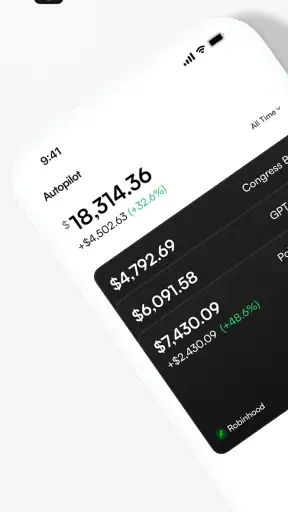

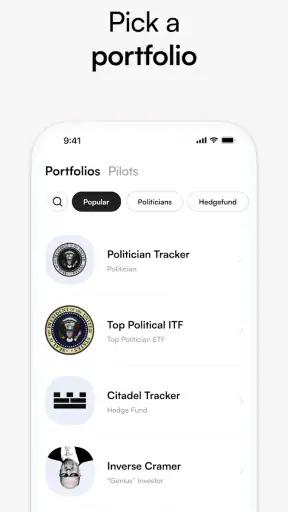
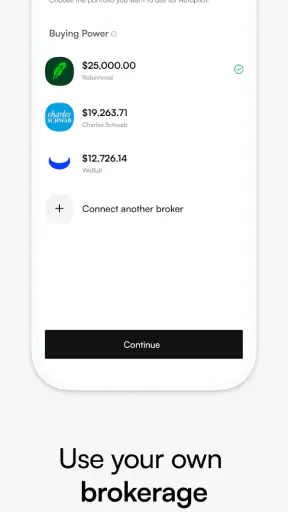
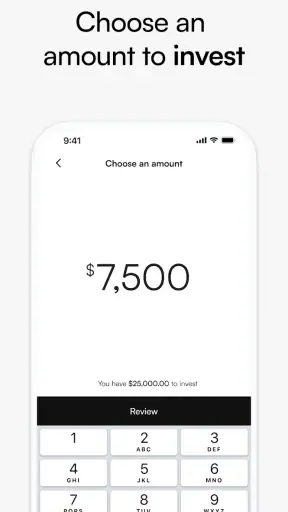
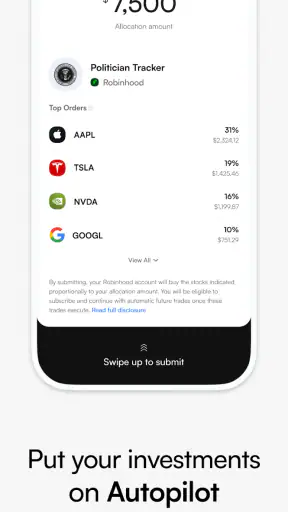
Starting to invest can feel more complicated than it should. There are unfamiliar terms, too many choices, and the uncomfortable question of what to do with your money after opening an account. Autopilot is designed around a simpler idea: make investing feel more approachable for people who want a modern finance app rather than a traditional, crowded brokerage experience. I found its appeal strongest when I treated it as a guided starting point, not as a promise of effortless wealth.
Developed by Autopilot Holdings Corporation, this free finance app is available for users aged Everyone and requires Android 10 or later. It has already attracted over a million installs, with a 4.7 average from around 7,500 ratings. Those figures suggest that the app has reached well beyond a small group of early adopters, although popularity should not replace checking whether its approach matches your own investing habits.
What to expect before you begin
The first thing I would tell a new user is to adjust expectations. The phrase “modern way to invest” sounds inviting, but Autopilot is still an investment tool, not a savings account or a guaranteed-return product. Your results can rise and fall with the market, and the app cannot remove the basic risks that come with putting money into investments.
What it can do is make the beginning less intimidating. Instead of approaching investing through a dense desktop platform filled with charts and technical controls, you get a mobile-first experience built for people who want to understand the path before making a decision. That distinction matters. A beginner usually needs confidence about the next step more than access to every possible trading instrument.
I also think the app is better suited to intentional, longer-term behavior than to constant market watching. If you want to check prices every few minutes, react to headlines, or build a highly customized portfolio from individual securities, a full brokerage platform may give you more control. If your main problem is getting started without feeling lost, Autopilot is easier to approach.
Before installing, decide what “success” means for you. It might be completing the account setup, understanding what an investment plan involves, or making a small first contribution that fits your budget. Defining that goal prevents the common mistake of opening an investing app and immediately judging yourself against experienced traders.
Who will benefit most from the mobile approach
I see the strongest fit for someone who has been postponing investing because conventional platforms feel overly technical. It can also suit a person who wants to manage basic investing tasks from a phone instead of switching between a bank app, a desktop dashboard, and several research websites.
Autopilot is less convincing for users who already know exactly how they want to construct and rebalance a portfolio. Experienced investors may prefer direct access to detailed research, advanced order controls, tax tools, or a broader range of assets. In that situation, a simpler interface can become a limitation rather than a benefit.
It is also not the right choice for money you may need immediately. I would keep emergency funds and near-term bills separate from an investment account. The app can make the process feel smooth, but a smooth interface does not make market investments instantly safe or instantly available at a predictable value.
Setting up an account without rushing the important decisions
My advice is to install Autopilot when you have a few quiet minutes, rather than while commuting or multitasking. The first setup is the point where you should slow down and read each prompt carefully. Finance apps are not like casual games: personal details, account choices, and funding decisions deserve deliberate attention.
Have the information you normally need for a financial account ready, and make sure the details you enter are accurate. A small spelling error or an overlooked prompt can create unnecessary friction later. I would also use a secure device, keep the operating system current, and avoid setting up an investment account on a public network.
When the app presents choices about your investing direction, answer based on your real situation rather than the person you hope to become. Your time horizon, comfort with losses, and available budget matter more than choosing the most ambitious-sounding option. A cautious answer is not a failure; it is more useful than selecting an aggressive path that will make you panic during a normal market decline.
The free price makes trying the app less intimidating, but “free” should not be interpreted as “without financial consequences.” The money you invest remains subject to the terms, risks, and costs associated with the investment service you use. I would review every confirmation screen before authorizing anything, especially when moving money or accepting an investment instruction.
A practical setup routine for first-time investors
I recommend using this order during setup:
Start by defining the purpose of the account in plain language, such as building long-term savings or learning how investing works.
Choose an amount that would not disrupt rent, bills, debt payments, or your emergency cushion.
Read the investment description and confirmation details instead of tapping through them automatically.
Finish the security steps carefully and record how you will review the account later.
Stop once the account is ready if you feel uncertain; you do not need to make every decision in one sitting.
This routine is useful because it separates account creation from emotional decision-making. New investors often feel pressure to prove that the setup was worthwhile by investing immediately. I would rather see someone complete the process, understand the choices, and return later with a clear budget than make a rushed deposit simply to reach the next screen.
The first meaningful success
For me, the first successful action is not seeing a dramatic gain. It is completing one sensible investing step and knowing why I took it. That could mean selecting an approach that matches your comfort level, confirming a contribution you can genuinely afford, or reaching a point where you can explain what the app is doing in your own words.
After that first action, resist the urge to judge the result too quickly. A short-term change in value says very little about whether your plan is appropriate. The more useful test is whether you can keep contributing or holding without abandoning your goal whenever the market moves in an uncomfortable direction.
A realistic example is a first-time investor who normally leaves spare money sitting in a current account. After payday, they open Autopilot, check that essential expenses are covered, and use only a modest amount for an investment decision they understand. They then schedule a regular review rather than refreshing the app throughout the day. The success is building a repeatable habit, not chasing a lucky result.
I would take a screenshot or note of the confirmation details for your own records, without storing sensitive information carelessly. Keep track of what you intended to do, when you did it, and what you expect to review next. This simple habit makes it easier to distinguish a planned decision from an impulsive reaction later.
Where new users can become confused
The biggest source of confusion is usually the difference between an app that simplifies access and an app that eliminates responsibility. Autopilot can make the journey feel less cluttered, but you still need to understand what you are choosing. If a term, investment description, or confirmation message is unclear, pause and look for an explanation before continuing.
Another common misunderstanding is assuming that a positive experience with the interface means the investment itself is low risk. These are separate questions. I judge the app on usability, clarity, and how comfortable it makes the process; I judge the investment decision on suitability, time horizon, diversification, and risk. A friendly screen cannot answer all of those questions for you.
Users may also confuse a portfolio value with money that is guaranteed to be available at that amount. Market values can change. If you are planning a purchase or payment on a fixed date, relying on an investment balance can create stress at exactly the wrong time. I would keep short-term goals in an appropriate cash-based place and reserve investing for money with more breathing room.
There is also a psychological trap in checking too often. A mobile app makes monitoring convenient, but convenience can encourage emotional trading. I prefer deciding in advance how often I will review progress. For a long-term beginner, a calm periodic check is generally more useful than reacting to every daily movement.
Three details that make the experience easier
First, use the app as a learning checkpoint rather than a replacement for learning. Before confirming an investment, write down what you believe you are buying, why it belongs in your plan, and what could make its value fall. If you cannot answer those questions, the correct next action may be research, not a deposit.
Second, separate the funding decision from the market mood. If you only invest when headlines are optimistic, you may end up buying after excitement has already built. If you stop whenever headlines are negative, you may abandon a reasonable plan during ordinary volatility. A written budget and schedule can protect you from making every decision based on the latest news.
Third, treat the app’s simplicity as a reason to verify, not a reason to skip verification. A streamlined flow can hide how quickly you are moving from intention to authorization. Read the final screen, check the amount, and confirm that the selected account or destination is the one you meant to use. This is especially important when you are tired or using a small phone screen.
These habits are not flashy features, but they are the difference between using a finance app thoughtfully and tapping through it on autopilot. They also remain useful if you later move to a more advanced brokerage service.
How it compares with familiar investing alternatives
Compared with a traditional brokerage website, Autopilot feels more approachable for someone who wants fewer barriers between curiosity and a first sensible action. A conventional platform can be better when you need extensive research, complex orders, or a broad toolkit. The trade-off is that its flexibility may overwhelm a beginner who has not yet learned the vocabulary.
Compared with a bank’s basic savings product, the app offers an investing route rather than simply holding cash. That can be useful for long-term goals, but it also introduces market risk. A savings account is usually easier to understand for money needed soon, while an investment app is more appropriate when you accept that values can fluctuate and your time horizon is longer.
Compared with a do-it-yourself trading app, Autopilot’s appeal is its lower mental load. A trading-focused alternative may offer more immediate control over individual choices, but that control can encourage frequent decisions and make beginners mistake activity for progress. I would choose the more advanced option only when I genuinely needed its tools and understood their consequences.
There is no universally best category winner here. The right choice depends on whether your main obstacle is lack of access, lack of knowledge, lack of discipline, or a need for advanced control. Autopilot addresses the first two more effectively than the last one.
What to do after the first week
Once the initial excitement fades, review your experience with three questions: Did the setup make sense? Did the amount fit comfortably within your budget? Can you explain your investment approach without relying on a slogan? If the answer to any of these is no, do not add more money simply because the app makes it easy to continue.
Use the next stage to create a personal routine. Decide when you will check the account, what event would justify changing your plan, and which goals should remain separate from investing. This turns the application from something you open impulsively into a tool with a defined role in your financial life.
It is also worth checking that your phone remains compatible as the app develops. The current version is 1.19.25, and the minimum operating system is Android 10. Keeping the app and device maintained helps avoid preventable access problems, particularly when you need to review an account or confirm an important action.
Autopilot has earned a 4.7 average across around 7,500 ratings and has about 1,100 written reviews, which gives a prospective user some useful reassurance that the experience has worked for many people. I would still treat those numbers as context rather than a substitute for personal fit. A highly rated app can remain unsuitable if its level of control, investment style, or learning curve does not match you.
My overall view is positive, with an important condition: the best first result is a clear, affordable investing habit, not a quick win. Autopilot is a sensible place to begin if you want a focused mobile finance experience and need help moving from hesitation to a considered first step. I would skip it in favor of a more comprehensive brokerage service if I needed advanced research or precise control, and I would avoid investing altogether until my short-term finances were stable.
If you approach Autopilot as a calm starting point rather than a shortcut around risk, its modern design can be genuinely useful. The app’s strongest contribution is reducing the friction around beginning; your responsibility is to supply the patience, budgeting, and understanding that no interface can provide.


